By James K. · Updated 2026-08-16 · 11 min read
The photo above shows what a modern IPTV box home screen actually looks like: a clean app launcher with sports, movies, and settings shortcuts. That simple layout hides the reason so many people are confused about this device. An IPTV box is only a media player. The channels you watch are delivered by an IPTV service, and both parts must work together.
Many buyers choose the wrong hardware, overpay for features they never use, or abandon a reliable box because one provider performed badly. That is not a device problem. It is a misinformation problem. This article separates common IPTV box myths from the reality you can verify on your own screen, so you can avoid wasted money and finally get the stream quality you expect.
Why Misconceptions Damage Results
Misconceptions about IPTV boxes are not harmless. They shape buying decisions and daily viewing habits in unhelpful ways. A person who believes the most expensive box always wins can spend too much on a device with 8GB of RAM and a gaming-grade processor when a simple 2GB model would stream the same channels.
Another person might blame the box for buffering when the real issue is an old router or a provider with weak servers. The result is the same: you keep replacing hardware, subscribing to new services, and feeling disappointed. The practical fix is to understand what the box controls, what the network controls, and what the IPTV provider controls.
Myth 1: A More Expensive IPTV Box Always Streams Better
The most persistent IPTV box myth is that price directly equals picture quality. Many buyers assume a $120 device will stream twice as smoothly as a $40 device. In real-world owner reports and teardown reviews, that is not how it works.
Reality: Price Reflects Features, Not Guaranteed Speed
A premium IPTV box has a faster processor, more RAM, and faster storage. Those specs make menus feel responsive and help when you flip between heavy apps. They do not change the resolution or smoothness of a stream by themselves. Picture quality, buffering, and channel switching are controlled by your internet connection, the IPTV provider's server, and the codec a channel uses. If the service is unstable, a faster box will not fix it. If the service is clean, a modest box can handle it.
The documented reality from user troubleshooting threads is simple: compare the network port, WiFi chip, operating system version, and codec support before you compare the price tag. Those details matter much more than a large number in the product title.
Myth 2: IPTV Box vs Firestick Always Ends With Firestick
Amazon Firestick is convenient, affordable, and everywhere. That reputation has led to a second myth: a Firestick is automatically the best IPTV box for live sports and general streaming. The comparison is not that simple.
Reality: A Dedicated Box Can Be Better for IPTV
Firestick runs apps well and works for casual users. But IPTV needs stable network throughput and good codec support. Many dedicated Android IPTV boxes include better network hardware, Gigabit Ethernet ports, and free access to alternative launchers without sideloading. That makes them easier to optimise for live sports, which needs consistent frame rates and quick channel changes.
The best IPTV box for live sports usually has more than one connectivity advantage over a stick: a real Ethernet port, dual-band WiFi, and a newer codec decoder. Firestick is still a valid choice, but it is not the only sensible one.
Myth 3: Every IPTV Box Requires a Long-Term Subscription
The fear of being locked into an annual contract stops many people from buying an IPTV box. This belief is understandable because many providers advertise twelve-month bundles, but it is not the whole picture.
Reality: No-Contract Options Are Widely Available
In most cases, the box is yours and the subscription is separate. That separation is actually your best protection. Many services now offer an iptv box subscription no contract, with month-to-month billing and no exit fee.
If you buy the hardware separately, you can test a service for a few weeks without losing your device if you decide to switch. No-contract plans also keep the pressure on providers to maintain stable servers, because unhappy users can leave immediately.
Myth 4: A 4K IPTV Box Guarantees 4K Picture Quality
The label “4K” sells devices. Many buyers see it on the box and assume every channel will look crystal clear. That assumption creates constant disappointment after installation.
Reality: Source Quality and Bandwidth Set the Ceiling
A 4K IPTV box review that is honest will tell you the device is only the last link in a long chain. Each channel must be broadcast in 4K, the provider must deliver that bitrate to your location, your network must handle it without packet loss, and your TV must accept the 4K signal over HDMI. If any one of those steps fails, the device can upscale the image, but it cannot create real 4K detail that was never there.
Check codec support, not just resolution. H.265/HEVC and VP9 support matter more than a 4K logo on the front of the device. Those formats determine whether your box can decode modern high-efficiency streams in real time.
Myth 5: A Cheap IPTV Box With WiFi Is All You Need
Budget boxes with built-in WiFi look like a great deal. In some homes they are. In others, they become a source of daily frustration because the network cannot keep up with the stream.
Reality: WiFi Is Fine Sometimes, but Wired Wins Under Load
A cheap iptv box with wifi can work well for standard channels in a modest apartment, especially when the router is close and the internet plan is fast. It struggles when many devices share the same network, when the router is behind thick walls, or when you try to watch high-bitrate 4K sports.
If you also want an iptv box for multiple TVs, remember that one box cannot send its HDMI signal wirelessly to another screen. You need a second box or a proper multi-room setup. For the main TV, use Ethernet whenever possible; it removes one of the biggest causes of buffering.
What Actually Works Based on Evidence
Streaming forums, hardware teardown videos, and long-term owner experiences point to a few practical principles. These habits reduce wasted money and improve the chance that your IPTV box performs the way you expect.
- Connect by Ethernet when possible. A cable does not magically increase download speed, but it removes WiFi interference and latency spikes that cause freezes.
- Match hardware to your main use. If live sports is your priority, look for a box with H.265 decoding, dual-band WiFi, 2GB or more RAM, and a responsive update schedule.
- Test with a short plan first. Use a provider that offers monthly payment so you can walk away if the channel quality drops on busy evenings.
- Buy hardware separately. Bundles that promise “one-time payment” or “lifetime access” often collapse because the service side is unstable.
- Read negative reviews too. Words like “WiFi keeps dropping” and “remote stopped working” tell you more than a row of five-star ratings.
The safest place to buy an iptv box is a brand store, an established electronics retailer, or a marketplace listing that clearly states the Android version, RAM, storage, WiFi standard, and Ethernet speed. If a seller cannot answer those basic questions, the device probably will not hold up well either.
Popular Belief vs Reality Comparison
This table summarises the five main IPTV box myths and the reality you can test for yourself.
Pros and Cons of Buying a Dedicated IPTV Box
✓ Benefits & Pros
No built-in monthly charge after purchase
Works with any IPTV app or service URL
Better network options than many stick devices
No contract tied to the hardware
✗ Limitations & Cons
Cheap models often have outdated Android versions
WiFi quality varies widely between brands
Pay attention to where you buy to avoid clones
One box alone is not a multi-TV system
RECOMMENDED RESOURCE
iptv box
Access zero-contract options and instant delivery specs.
See iptv box Pricing →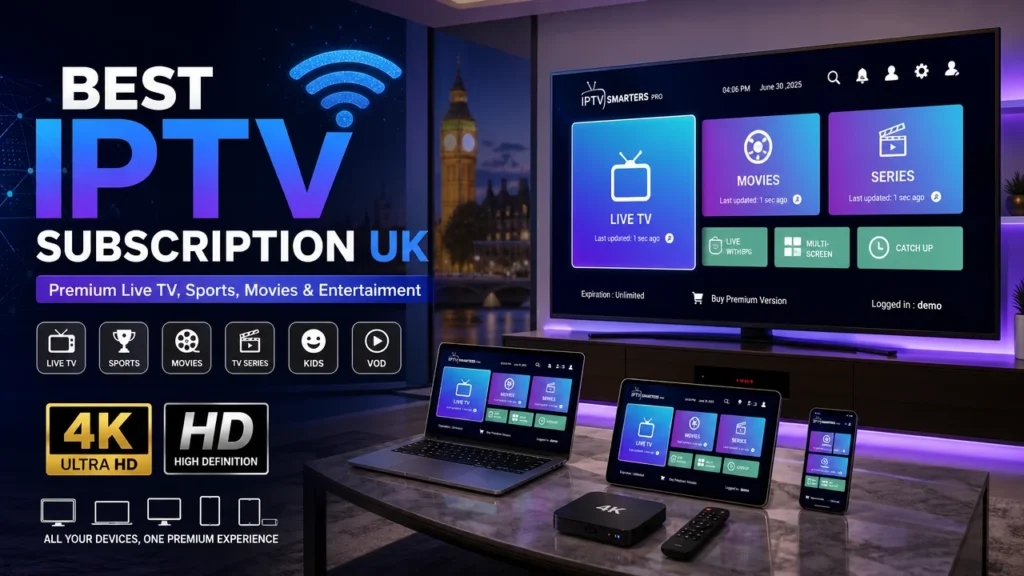
The photo above gives you a realistic view of what a sports channel can look like when the provider, network, and device all pull in the same direction. That is the result you want from a 4K IPTV box review: a device that handles modern codecs and keeps the stream stable under real viewing conditions.
Read independent network latency reviews and hardware specs before you choose.
Find Out More About iptv box →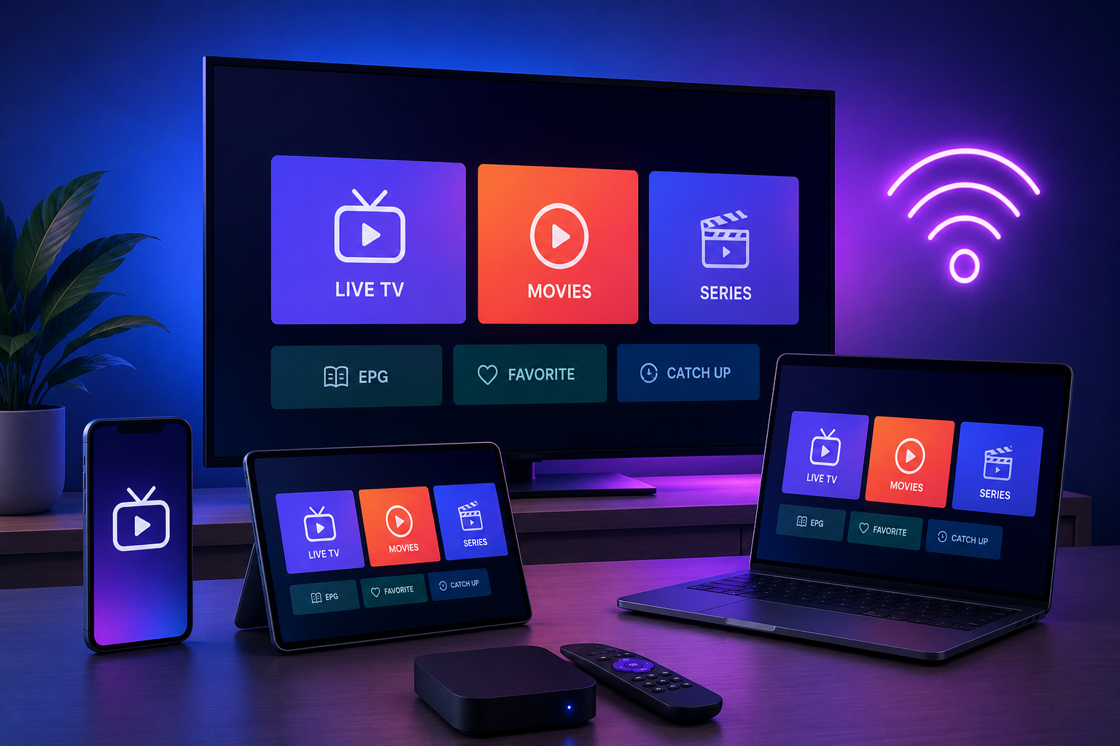
The connection flow in the image above is the mental model for every IPTV troubleshooting session. Router, box, TV. When people ask why their channels freeze, the answer is usually in one of those links rather than in the remote or the HDMI cable.
Final Thoughts: Focus on the Connection and the Service
An IPTV box deserves a place in many home setups, but it should not be treated as a magic device. It is a small computer that needs a healthy network, a compatible app, and a provider that actually sends the bandwidth you pay for. Ignore the myth that the most expensive hardware will save a bad service.
The evidence is consistent: people who succeed with IPTV choose hardware based on codec support and Ethernet, test with no-contract subscriptions, and buy from sellers who publish real specifications. If you do the same, you will spend less and stream with fewer interruptions.
Featured Streaming Selection:
Learn more about iptv box →Affiliate Disclosure: Clicking this secure link verified by our network supports our team through standard partnership terms at zero extra cost to your invoice.
Frequently Asked Questions
This article contains affiliate links. Our editorial analysis remains independent.