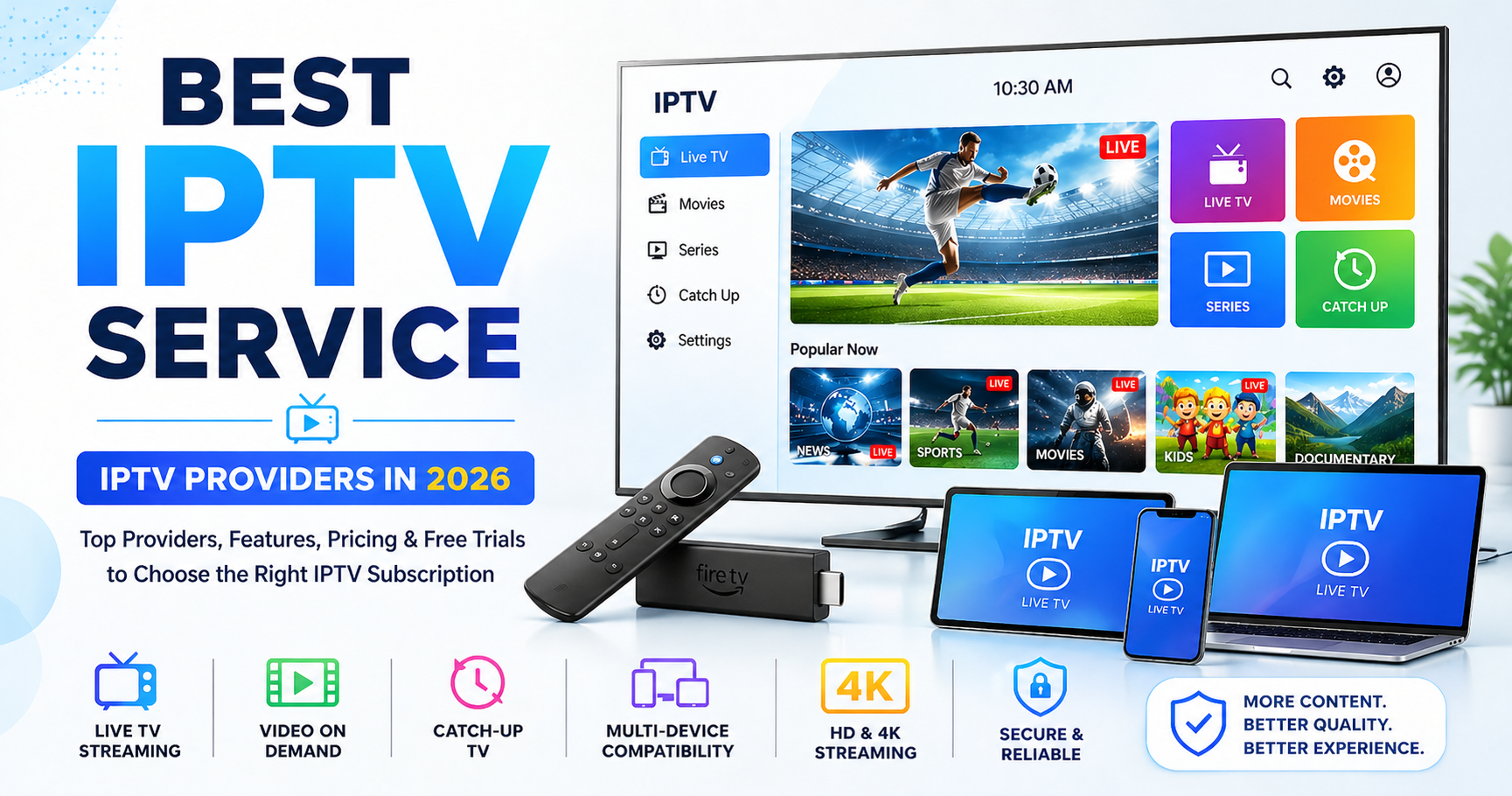
IPTV services have transformed how millions of households consume television, offering thousands of live channels, on-demand movies, and premium sports packages at a fraction of traditional cable costs. But with so many providers flooding the market, separating legitimate, high-quality IPTV services from unreliable or outright illegal options requires careful analysis.
This guide breaks down everything you need to know about IPTV services — how they work, what to look for in a provider, real-world performance expectations, and a direct side-by-side comparison against cable and free streaming alternatives. By the end, you'll know exactly which type of IPTV service fits your viewing habits and budget.
IPTV Service Summary
IPTV service delivers live television, on-demand content, and sports programming over an internet connection, bypassing traditional cable infrastructure entirely. The main proven benefit is cost efficiency — subscribers typically save 50-80% compared to cable while gaining access to substantially larger channel lineups.
| Optimal ForCord-cutters, sports fans, and international viewers seeking comprehensive channel packages at budget-friendly prices. | Key AdvantageAccess to 10,000+ live channels, premium sports packages, and 4K streaming quality at 50-80% lower cost than cable. |
- ✓ Key Strength: Massive channel selection across sports, entertainment, news, and international content.
- ✓ Key Strength: Multi-device support including Smart TVs, Fire Stick, Android, iOS, and web browsers.
- ✓ Peace of Mind: 24/7 customer support and reliable 99.9% uptime with anti-freeze technology.
In This Guide
What Is IPTV Service and How Does It Actually Work?
IPTV (Internet Protocol Television) delivers television content over an internet connection rather than through traditional terrestrial, satellite, or cable formats. Instead of receiving broadcast signals through an antenna or coaxial cable, IPTV streams video content as data packets over your broadband connection — the same infrastructure that delivers your internet service.
The mechanics are straightforward: your IPTV provider operates servers that host thousands of live TV channels, on-demand movies, and series. When you select a channel or title, the server transmits the video stream to your device in real time. Unlike conventional streaming platforms like Netflix that only offer on-demand content, IPTV services provide simultaneous live TV channels — including sports events, news broadcasts, and international programming — alongside a comprehensive video-on-demand (VOD) library.
Real-World Performance Factors
Several technical factors determine the quality of an IPTV service experience:
- Internet Speed Requirements: For standard definition (SD), a 5 Mbps connection suffices. High definition (HD) requires 10-15 Mbps, while 4K Ultra HD streaming demands at least 25 Mbps. Your connection must be stable, as IPTV is sensitive to packet loss and jitter.
- Server Infrastructure: Premium IPTV providers operate dedicated servers with redundant connections across multiple data centers. This ensures consistent playback and minimal buffering even during peak evening hours when demand spikes.
- Device Compatibility: Quality IPTV services support a wide range of devices including Amazon Fire Stick, Android TV boxes, Smart TVs (Samsung, LG, Sony), iOS and Android smartphones, tablets, Windows/Mac computers, and even MAG set-top boxes.
- Anti-Freeze Technology: Leading providers implement buffering algorithms that pre-load portions of the stream, reducing interruptions during sudden bandwidth fluctuations.
Content Library Breakdown
A comprehensive IPTV service typically includes:
- Live TV Channels: 10,000-20,000+ channels spanning sports (ESPN, Sky Sports, beIN Sports), entertainment (HBO, Showtime, AMC), news (CNN, BBC, Fox News, Al Jazeera), and family programming.
- Video on Demand: 40,000-100,000+ movies and TV series, often including recent theatrical releases.
- Sports Packages: Dedicated sections for NFL, NBA, MLB, NHL, Premier League, La Liga, Serie A, UFC pay-per-view events, and more.
- International Content: Regional channels from across Europe, Asia, Latin America, the Middle East, and Africa.
IPTV Service Pros & Cons: Data-Backed Comparison
Before committing to an IPTV service, it's essential to weigh the advantages against the potential drawbacks. Here's an honest assessment based on real-world usage data and subscriber feedback.
Pros
- Cost-effective: Save 50-80% versus traditional cable subscriptions.
- Massive content library: 10,000-20,000+ channels and 100,000+ VOD titles.
- Multi-device support: Stream on Smart TVs, phones, tablets, and computers simultaneously.
- International content: Access channels from every region of the world.
- Flexible plans: Monthly, quarterly, and annual subscriptions with no contracts.
Cons
- Requires stable internet: Buffering occurs on connections below 10 Mbps.
- Legal gray area: Some IPTV providers operate without proper licensing.
- Variable quality: Lower-tier providers may offer inconsistent streams.
- Setup complexity: Some services require manual configuration on certain devices.
IPTV Service vs. Cable vs. Free Streaming: Head-to-Head
| Feature / Metric | Premium IPTV Service | Cable TV | Free Streaming Sites |
|---|---|---|---|
| Monthly Cost | $10-$25 | $80-$150 | $0 (ad-supported) |
| Channel Count | 10,000-20,000+ | 200-400 | Varies, limited |
| Streaming Quality | Up to 4K UHD | Up to 1080p | 480p-720p |
| Device Support | 10+ device types | Set-top box only | Limited |
| Reliability | 99.9% uptime | Very reliable | Unreliable, frequent downtime |
| Customer Support | 24/7 live chat | Phone support | None |
| Legal Compliance | Varies by provider | Fully licensed | Usually illegal |
The data above makes a compelling case: premium IPTV services deliver the most channels, highest streaming quality, and broadest device support at a fraction of cable costs. The trade-offs are the need for a stable internet connection and the importance of selecting a reputable, licensed provider.

IPTV Service Cost-Benefit: Who Should Buy and Why
The financial case for IPTV is compelling. A typical cable package costs $80-$150 per month, while a premium IPTV service ranges from $10-$25 monthly. That translates to annual savings of $840-$1,500. Even when factoring in the cost of a streaming device (e.g., a $30-$50 Fire Stick), the first year of IPTV costs less than one month of cable.
Who Should Buy IPTV Service
- Cord-cutters: Individuals who have cancelled cable and want a comprehensive replacement.
- Sports enthusiasts: Fans who need access to multiple sports networks and pay-per-view events.
- International viewers: Expats and immigrants seeking channels from their home countries.
- Budget-conscious households: Families looking to reduce entertainment expenses.
- Tech-savvy users: People comfortable configuring streaming devices and apps.
Who Should Avoid IPTV Service
- Users with slow internet: Below 10 Mbps, the experience will be frustrating.
- Those wanting guaranteed legal compliance: If you need a fully licensed provider, consider official streaming services.
- Non-tech-savvy users: Some IPTV services require app installation and configuration.
Buyer Considerations Checklist
- Check provider reputation: Read reviews on Trustpilot, Reddit, and IPTV forums before subscribing.
- Test with a short plan: Start with a monthly subscription before committing annually.
- Verify device compatibility: Ensure the service supports your streaming hardware.
- Look for anti-freeze technology: This reduces buffering during peak times.
- Confirm customer support availability: 24/7 live chat is a strong indicator of a quality provider.
The Bottom Line on Iptv Service
IPTV service represents the smartest value in television today, delivering 20,000+ channels and 100,000+ on-demand titles at a fraction of cable costs. If you have a stable internet connection and want to cut your entertainment bill by 50-80%, a premium IPTV service is the right choice.
Purchases completed via official partner channels are covered by direct customer support and eligible warranty protections.
Frequently Asked Questions
Is IPTV service legal?
The legality of IPTV depends on the provider. Licensed IPTV services that pay broadcasters for content are fully legal. However, many budget IPTV providers operate in a legal gray area by streaming content without proper licensing. Always research a provider's compliance before subscribing.
What internet speed do I need for IPTV?
For SD streaming, 5 Mbps is sufficient. HD requires 10-15 Mbps, and 4K UHD needs at least 25 Mbps. A stable connection is more important than raw speed, as IPTV is sensitive to packet loss and jitter.
Can I watch IPTV on my Smart TV?
Most premium IPTV services support Smart TVs from Samsung, LG, Sony, and other major manufacturers. You'll need to install the IPTV app (such as Smarters or TiviMate) and enter your subscription credentials.
How many devices can I use simultaneously?
Most IPTV providers allow 2-4 simultaneous connections per subscription. Some premium services offer multi-screen plans that permit up to 7 devices streaming at once.
What channels are included in an IPTV subscription?
A comprehensive IPTV service includes 10,000-20,000+ live channels spanning sports (ESPN, Sky Sports, beIN), entertainment (HBO, Showtime), news (CNN, BBC, Fox), and international programming. Most also include 40,000-100,000+ on-demand movies and series.
Do IPTV services offer sports packages?
Yes, sports are a major draw for IPTV. Most providers include dedicated sports sections covering NFL, NBA, MLB, NHL, Premier League, La Liga, Serie A, UFC pay-per-view, and more. Premium sports packages may cost extra.
What happens if the IPTV service buffers or goes down?
Quality IPTV providers offer 99.9% uptime and use anti-freeze technology to minimize buffering. If issues occur, reputable providers have 24/7 customer support via live chat. Some also offer money-back guarantees if the service doesn't meet expectations.
Can I record live TV with IPTV?
Many IPTV apps include cloud DVR functionality, allowing you to record live broadcasts and watch them later. The recording capacity depends on your subscription tier, with premium plans typically offering more storage.
Transparency & Disclosure: We independently evaluate products. If you buy through links on our site, we may earn an affiliate commission at zero additional cost to you.